
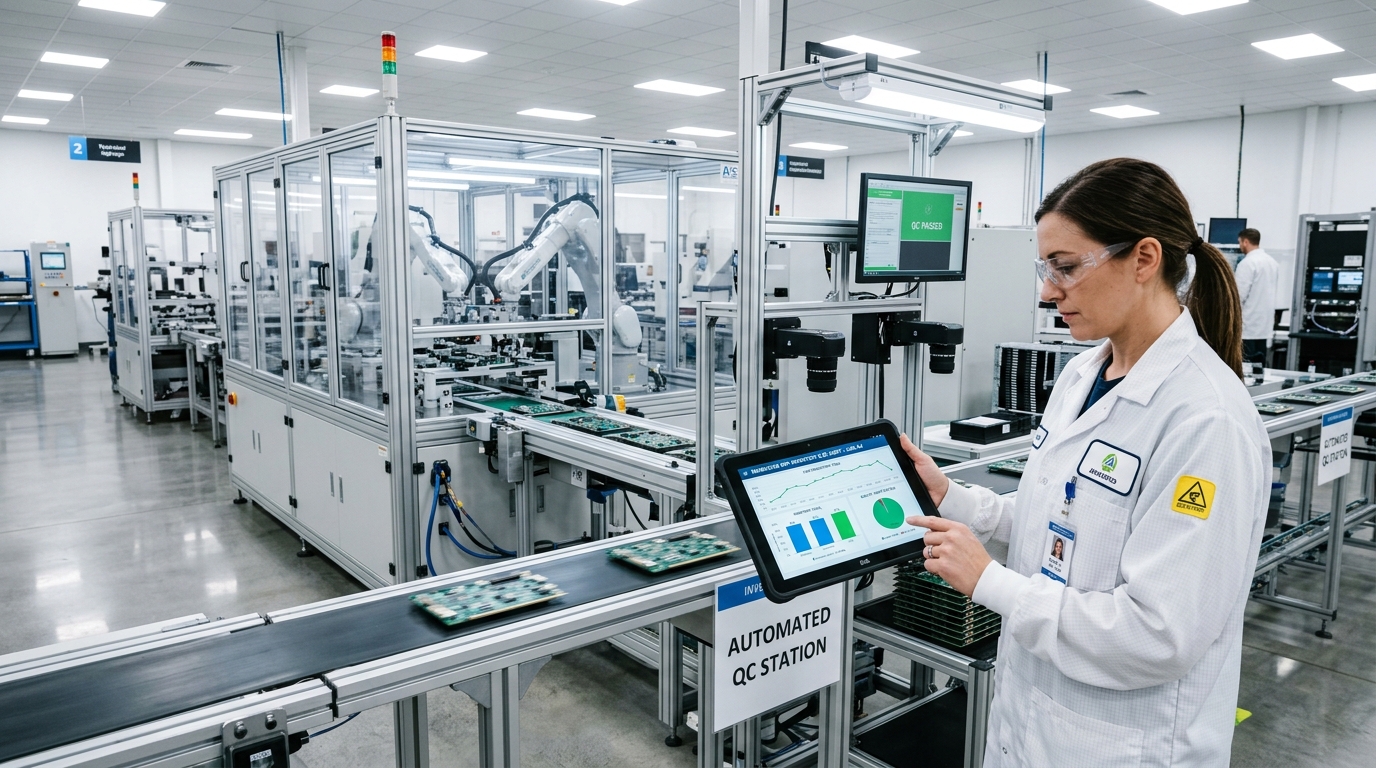
Micro, Small, and Medium Enterprises (MSMEs) form the backbone of the manufacturing sector. However, as business scales, manual processes can become a major bottleneck. From spreadsheets tracking inventory to paper-based purchase orders, reliance on disconnected manual processes often leads to double ordering, late vendor deliveries, and lack of real-time visibility into factory floor operations.
Enter Enterprise Resource Planning (ERP) software. While large corporations rely on expensive, rigid off-the-shelf software packages, manufacturing MSMEs require flexibility and speed. Implementing a custom cloud ERP tailored specifically to your workshop's flow is the most efficient way to optimize production, simplify compliance, and maintain control of your margins.
1. The Common Bottlenecks in Manual Manufacturing
Without a centralized database system, manufacturing plants face several operational leakages daily:
- Inaccurate Stock Records: Stockouts on critical parts halt production lines, while overstocking ties up valuable business capital.
- Scattered Vendor Communication: Tracking multiple vendors for pricing, deliveries, and payment schedules over phone calls and WhatsApp groups leads to errors.
- Delayed Reporting: Calculating the cost of goods sold (COGS) and profit margins manually at the end of the month means you are reacting to past data rather than planning ahead.
2. Why Custom Cloud ERP is Superior for MSMEs
Packaged software solutions often require companies to change their operations to match the system. A custom cloud ERP reverses this: the software is built to match your existing, successful business workflows.
"Custom ERP development ensures that MSMEs only pay for the modules they actually need—avoiding bloated licensing fees and complex user interfaces that floor staff struggle to adopt."
Furthermore, cloud deployment enables managers to log in securely from their mobile phones, tablets, or desktop systems anywhere, checking production progress and stock balances in real time.
3. Core Custom Modules to Automate Your Factory
To maximize efficiency, a manufacturing ERP should integrate the following crucial operations:
A. Live Inventory and Material Tracking
Tracks raw materials, work-in-progress (WIP) items, and finished products. Low-stock alerts automatically notify the purchasing team when a material falls below safety thresholds, ensuring production lines never stop.
B. Production Planning and Machine Scheduling
Assigns jobs to specific machines and workers based on capacity and deadlines. Live status dashboards show the exact stage of every batch (e.g., cutting, molding, assembly, quality check, packaging).
C. Procurement and Vendor Management
Simplifies purchase orders (POs) and keeps logs of vendor performance. Vendor portal access allows external partners to update delivery timelines directly, eliminating unnecessary phone tag.
D. GST Invoicing and Ledger Integration
Automatically generates GST-compliant e-invoices, e-way bills, and delivery chalans on product dispatch. Financial ledgers are updated instantly on invoice generation, simplifying monthly GST filings (GSTR-1 and GSTR-3B).
4. Business Benefits of ERP Automation
MSMEs that implement tailored cloud systems experience immediate improvements in key operational metrics:
- Carrying Cost Reduction: Optimizing inventory levels decreases warehousing and storage costs by 20% to 30%.
- Higher Labor Efficiency: Minimizing waiting times for parts or machine assignments increases total shift throughput.
- Accurate Costing: Real-time tracking of raw material changes and labor times provides precise profit margins per product line.
5. Conclusion: Take Control of Your Scale
Custom ERP software is no longer a luxury reserved for multi-national corporations. Today, cloud technologies and modern web development frameworks have made custom platforms highly accessible for ambitious MSMEs. By automating your stock, scheduling, and invoicing, you lay a solid foundation for scalable, data-backed growth. At Keyline Digital Consultant, our software engineering division builds, deploys, and maintains custom business portals tailored to your exact manufacturing requirements.